
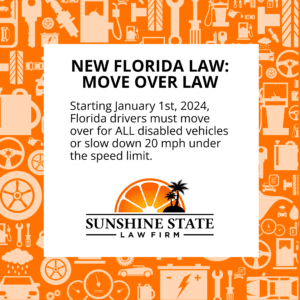
Florida’s Move Over Law 2024 took effect on January 1, 2024, expanding protections for drivers and roadside workers across the state. The updated law requires motorists to change lanes or slow down when approaching disabled vehicles displaying hazard lights, emergency flares, warning signage, or when people are visibly present near the vehicle.
Previously, Florida law focused primarily on emergency responders, tow trucks, and law enforcement vehicles. Under the updated statute, the Move Over Law now applies to all disabled vehicles, recognizing that stranded drivers face serious risk when stopped along busy roadways.
What the Florida Move Over Law 2024 Requires
When approaching a disabled vehicle on the roadside, drivers must move over to an adjacent lane if possible. If changing lanes cannot be done safely, drivers are required to slow down to at least 20 miles per hour below the posted speed limit. These rules apply on highways, interstates, and surface streets throughout Florida.
Roadside incidents remain a serious safety issue. According to AAA, an average of 350 people are killed each year while standing outside disabled vehicles. Tow truck operators face especially high risk, with fatality rates significantly above the national average. In 2023 alone, Florida Highway Patrol reported 176 crashes caused by drivers failing to move over.
By expanding the Move Over Law, Florida aims to reduce preventable injuries and fatalities while improving safety for stranded motorists, roadside workers, and first responders alike.
Drivers who violate the Florida Move Over Law 2024 may receive a noncriminal moving violation and face fines of approximately $158, along with points on their driving record depending on the circumstances.
At Sunshine State Law Firm, we believe informed drivers make safer roads. If you or a loved one has been injured in a roadside or vehicle-related accident, contact us today for a FREE consultation and learn how we can help you protect your recovery.